Category: Blog

  • Digital Marketing Mastery 2025: Powerful Strategies, Career Paths & SEO Breakdown

    Digital Marketing Guide 2025: Strategy, Careers, SEO & Growth Explained is a kind of comprehensive guide that provides the online grind essentials for beginners and businesses alike.

    The evolution of the internet is very rapid and brands can no longer depend on ‘vibes’ — they need a strong strategy that is based on data, consumer trends and smart tools. This guide lays out the workings of digital marketing in 2025 from the creation of a good strategy to the selection of proper channels that include SEO, social media, email, PPC, and content.

    The goal is very straightforward: to help businesses become visible, trustable, and grow without losing time and money. The new technologies such as AI, automation, voice search, and privacy laws have changed the scenery, hence it is no longer optional to be up to date.

    On the career aspect, this guide also reveals that the digital marketing area is booming in terms of job opportunities. Be it a writer, an analyst, an ads person or a web techie, there is a position with actual potential for development. Demand is high for SEO experts, performance marketers, content strategists, and social media managers.

    The title itself basically conveys a complete map for anyone who wants to comprehend online marketing or start a career in it. You get the big picture: what works, what’s changing, and how to stay ahead in a digital world that moves quicker than your Instagram feed.

    Digital Marketing

    Introduction

    The modern online environment does not allow to underrate the significance of digital marketing in the development of enterprises. The digital promotion of your company is still a must whether you are a solo shop owner or a leader of a global business.

    What is digital marketing? On the most simple level, it is a process of selling products or services over the internet, employing social networks, emails, and websites while utilizing search engines. The objective is to contact the companies and clientele through the most effective and innovative ways available at that moment. This blog takes a close look at the types of digital marketing, major strategies, career prospects, and one of the most powerful tools in this area-technique of SEO in digital marketing.

    What Is Digital Marketing?

    Digital marketing is to be seen as the online equivalent of placing your business before the right audience, by utilizing tools such as social media, search engines, websites, emails, and paid ads. Rather than broadcasting your message to a wide audience, you concentrate on certain individuals depending on their interests, geographical location, and online behavior.

    It is a solution that is practical, quick, and much more accurate than the traditional methods. Digital marketing is capable of performing a whole range of functions from increasing brand recognition to selling products; it perfectly aligns businesses with the places where their customers are, that is, on their phones and laptops.

    Lets start with the very basics. It is the promotion of goods and services through Internet and other digital technologies. Digital marketing encompasses everything from Google ads and social media marketing campaigns to direct emails, influencer collaborations, SEO, and so on. The objective is to attract potential customers and thus increase sales or engagement with the brand.

    In the case of marketing analytics and KPIs, it can be flexible and make room. In the case of old-fashioned marketing, businesses have to send their message to a mass audience, while digital marketing gives companies the possibility of cutting down their target market and tailoring the message according to the customer’s age, residence, hobbies, and behavior patterns.

    In today’s business world, the marketing function is highly appreciated since it is through the use of advertising that companies are able to reap the benefits of marketing ecosystem elements such as visibility, trust, and loyalty.

    Ads on the Internet are, in a way, following you all over the place. If you want to, you can even specify the exact toppings for a pizza that people should like. And the audience? Incredible. One click and just like that—your advertisement is shown to billions of people. Compared to this, traditional adverts sound like whispering into the empty space. So, yes, digital marketing is the winner so far—accuracy, reach, everything. Sorry, radio, you have lost your prime time.

    Why Digital Marketing Actually Matters (Like, Right Now)

    Digital marketing is veryImportant right now because the entire planet is more or less living online and if your business is not present there, you are losing customers without even being aware of it. People check reviews, compare prices and make decisions about purchases with their phones faster than you can blink.

    Digital marketing gives you real data, real targeting, and real results – not guesswork. It is cheaper, faster and way more direct than traditional marketing, but it still follows the classic rule: be where your audience really is. With tiny attention spans and fierce competition, digital marketing will always keep your brand visible, trusted and ahead of the pack who are still in the past.

    Let’s face it: the internet has taken over the world. Everybody and their grandma is online—really, five billion people are using browsers every single day. And they don’t just watch cat videos (maybe a little). People are looking for reviews, checking out brands, and buying at 2 a.m.

    So, digital marketing? It’s a must. If your business is offline, it is as if you are yelling into the void. The picture is like this:

    • You can make your advertisement reach the entire world without spending a fortune.
    • Customers can really contact you, make inquiries, complain, compliment—just in your DMs.
    • You receive immediate feedback—like, “Is this ad effective? Oh, no, let’s change it.”
    • Creating a brand? Much quicker than that sweepstake and old-fashioned billboard which your father still trusts.

    Read Also: 5 Powerful Ways Performance Marketing Boosts Your Growth

    Types of Digital Marketing

    1. Search Engine Optimization (SEO)

    search engine optimization. Or as I prefer to phrase it, the dramatic portrayal of pleading Google for just a bit of its light. Actually, if your web page is just laying on the third page of the search results, it’s no better than a melancholic voice in an empty space—nobody is there to hear you. Besides, people are even less likely to have the patience for the first page. I mean, do you know anyone who’s got time for the second page?

    Here is how the story goes. Put in some delectable keywords, get rid of that old school web design (no kidding, if it is crying My Space, it has got to go), and for heaven’s sake, make it faster—no one is going to wait for your home page to get awakened from its slumber. We will dive into SEO’s ins and outs soon, but to be honest? Forget about SEO and your website is pretty much unseen—like being in a bunker, cloaked with invisibility. There will be no way for you to be seen, getting noticed that way is going to be tough.

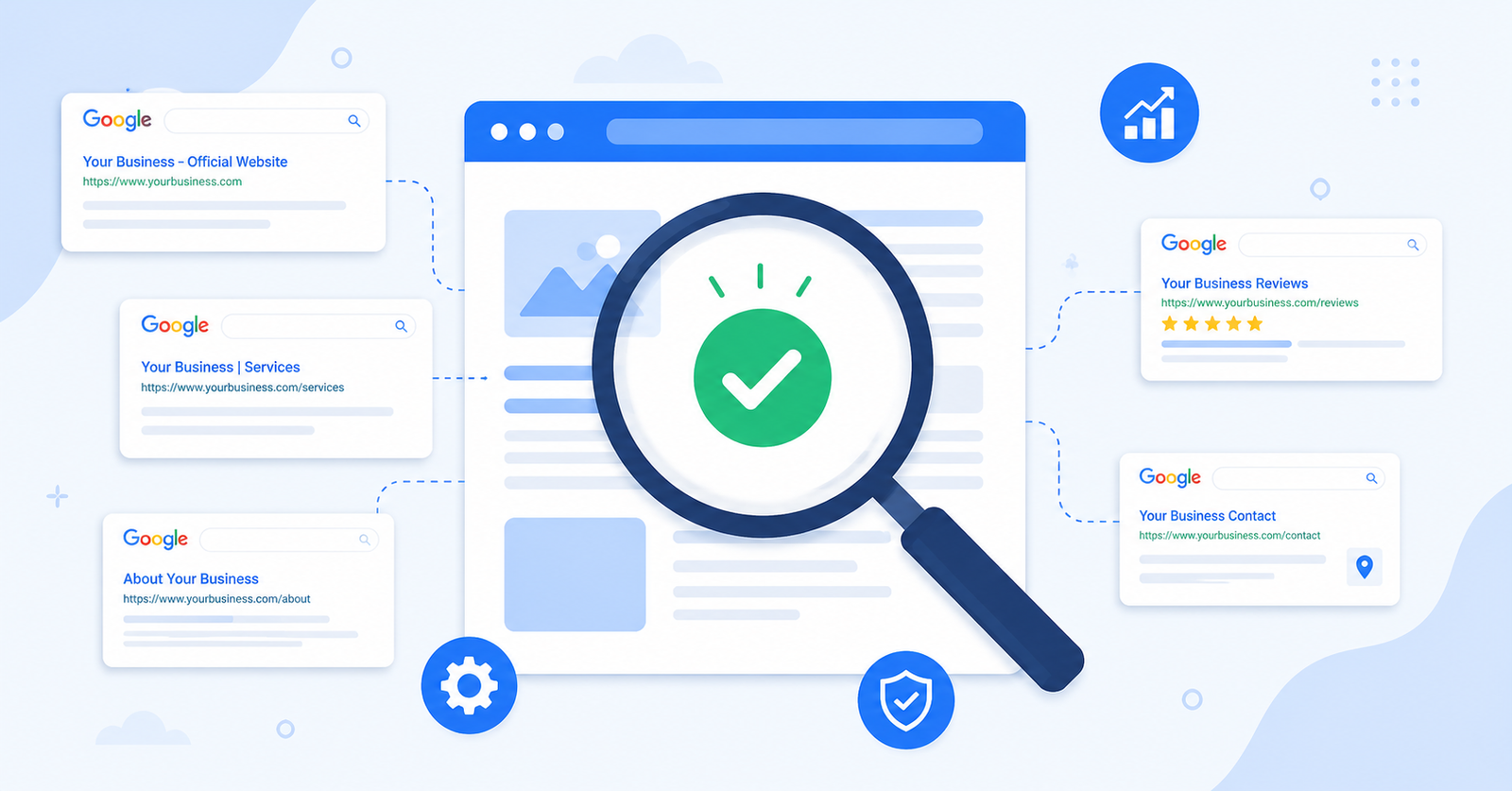
    Search Engine Optimization (SEO) is nothing but a method to ensure that your website is displayed high up on Google so people can find you easily instead of your site getting lost somewhere on page two or three. It’s a mixture of smart keyword use, a clean content structure, strong backlinks, and a website that loads fast and works smoothly on every device.

    When SEO is correctly applied, Google starts to trust your site more which in turn pushes you to the top where the real traffic is. It is a practical, long-term, and one of the most reliable ways to bring in steady, organic visitors without paying for every single click.

    2. Pay-Per-Click Advertising (PPC)

    Let’s get into the subject of PPC. In fact, you are listen to the conversation about PPC. The whole concept is that you pay only if a user clicks on your advertisement. No click means no payment. It is as easy as this. Google Ads, Meta Ads (for those who are a bit behind, these are the ads for Facebook and Instagram) — these are the top players.

    PPC is life-saving in a situation where you want to show your products to the public as soon as possible. Want to go as precise as 24-year-old cat lovers in Milwaukee who are searching for “organic kibble”? No problem with PPC. You can even target particular age groups, interests, and what people had for lunch (though probably not that creepy… yet). There’s also the good part of seeing the numbers coming in, thus knowing what is effective and not having to guess by just throwing spaghetti at the wall.

    Pay-Per-Click Advertising (PPC) is the way to get instant online visibility in a very practical manner. It is like you can say that you pay only by the time a person clicks your ad. This makes PPC much more efficient than the traditional way of blowing money on ads.

    Platforms like Google Ads and Meta Ads allow you to specify the area you want to get the viewers from, and their age, and interests and even the recent searches they have done. In this way your ads get to showcase the product to the very crowd that is most likely to buy. It is a fast, measurable, and great when you need the results immediately no matter if it is a product launch, increasing traffic, or outshining competitors who are already bidding for the spotlight.

    Web Development Service

    3. Social Media Marketing

    Let’s face it—if followers can’t see your brand while scrolling through Instagram, TikTok, or Facebook, or even checking out LinkedIn, you are practically non-existent. No kidding, the social media is the hub of all activities. It is not about just annoying people with ads and praying.

    The core of social media marketing is being present at the virtual places where the people spend their time—the ones scrolling through Instagram, Facebook, TikTok, YouTube, and LinkedIn. And it is not just posting odd bits of content; it is actually developing a true presence, getting closer to the audience, and providing valuable content. Whichever way you choose to promote your brand—whether through product launches, customer support, or running ads—social media will keep you noticed and approachable. It’s the best way to gain trust, create a community, and keep your brand in front of people constantly.

    4. Content Marketing

    Content marketing may be considered the Swiss Army knife of digital marketing, including the whole spectrum of blogs, videos, podcasts, and infographics. The secret is not to just hammer products into the customers’ heads.

    Instead, you want to be the friend who knows a lot at the same time providing the best advice, and possibly even making one laugh with the process. You give your assistance and they give you their trust. That is how it works. Besides, let’s face it—if Google is fond of your content, you are in a good place. This is the SEO wizardry at work.

    Content Marketing is in reality the long-term strategy—making of useful, clear, and meaningful content that actually helps people instead of just pushing sales. Consider blogs, videos, reels, guides, podcasts, and infographics. Sharing valuable information results in people trusting your brand and returning for more.

    It improves your SEO, enhances your online presence, and makes you the one who is authoritative on the subject. Rather than simply screaming “buy this,” you become the go-to source which people are inclined to come to, which elicits better interaction, stronger ties, and constant increase in numbers accordingly.

    5. Email Marketing

    The old band that somehow keeps producing hits year after year is akin to email marketing. In fact, people have been declaring email dead since My Space, but it is still the ruler in terms of ROI. Companies make use of email for various purposes new products promotion, discount offering, and simply maintaining the conversation. The best part is that now you can use these fancy automation tools to give every subscriber the feeling that you are writing just for them—even if, in reality, you are having coffee while a computer does the heavy lifting.

    Email Marketing is like the steady workhorse of the digital world — simple, reliable, and still one of the best ways to stay connected with your audience. You send targeted emails to share updates, offers, guides, or anything useful that keeps your customers in the loop. It’s cost-effective, easy to automate, and gives you full control over who sees your message. Plus, people check their inbox every day, so it’s a practical way to build long-term relationships and bring folks back to your website without spending big on ads.

    6. Affiliate marketing 

    Affiliate marketing gives an opportunity to others ( publishers or influencers ) to promote your product and receive a commission. It’s an economical way to increase your reach and get more sales.

    Affiliate Marketing is like a situation where both sides benefit. You hire authors, bloggers, or influencers to sell your product and you give them money only when they succeed in making a sale. No upfront cost, no budget wasted — only performance. It’s smart because you are using someone else’s audience and trust which gives your brand a larger reach without you doing all the hard work. Imagine it like having a group of marketers working for you, but you only pay them when it’s really done.

    7. Influencer marketing 

    In this form of digital marketing,  brands work together with influencers that have already engaged audiences. It is a strategy that contributes to the creation of trust and at the same time enables easy access to niche markets.

    Influencer Marketing is nothing less than the collaboration of personalities who possess a loyal following and an established authority in their domain. Instead of broadcasting your message and hoping that some of the people in the crowd will hear it, you allow a trustworthy person to speak on your behalf, thereby your brand’s credibility goes up instantaneously. It is a wise move as influencers are well aware of their followers’ preferences, thoughts, and the type of content that would ignite their interest. It could be a fast product review, a story shoutout, or a complete campaign; influencers can get you to the right people quicker and more authentically than traditional advertising ever could.

    Web Development Service

    What is SEO in digital marketing ? 

    SEO—this is the full version of the fancy term Search Engine Optimization, but honestly, it is just a way to give your website a little bit of style so it actually appears when users are Googling something. Who wants a website that is not listed on page two or even three? The best spot on the page is what you are looking for.

    Digital Marketing

    Digital marketing employs SEO as a means to facilitate the process of search engines like Google understanding, trusting, and ranking your website higher. Whenever a person inputs a search term that relates to your company, good SEO can help your site appear at the top rather than getting lost under competitors. A combination of intelligent keywords, well-structured content, rapid loading speed, mobile compatibility, and good backlinks constitutes the mix. To sum up, SEO makes your website not just present online but also visible, connecting to the appropriate audience and ready to do so without incurring costs for every click.

    Types of SEO : 

    1. On-page SEO is all about fixing up the stuff you control on your own website. That means writing clear content, using the right keywords, crafting solid titles, and making sure your headings and layout actually help Google understand what your page is about. When your content is tidy and relevant, search engines rank you higher.
    2. Off-page SEO focuses on what happens outside your site. Think backlinks, brand mentions, and building trust by getting other websites — especially good ones — to link to you. It’s basically your site earning reputation points across the internet, and Google pays attention to that.
    3. Technical SEO handles the behind-the-scenes setup that keeps your site running smooth. Fast loading speed, proper indexing, secure connections, and mobile-friendly design — all of that matters. If your site lags, breaks, or confuses Google’s crawlers, your rankings drop fast. Solid technical SEO keeps everything clean, quick, and easy to access.

    Digital marketing is now mostly influenced by several significant changes, and these changes are such that a brand cannot ignore them anymore. In the first place, AI and automation are now the giants who control everything—smarter ad targeting and auto-generated content, all companies are getting faster and more personalized without even lifting a finger.

    Then we have voice search, which is the new way for the consumers to get the information they are looking for. No more writing down formal queries; the consumer would rather ask his or her phone the casual, real-talk questions just like they would speak to their friend, therefore companies have to optimize their content for spoken words and not just typed ones.

    Data privacy has also turned out to be a pretty serious issue. People are now very much aware of the things that brands do with their info, therefore being transparent and acting respectively is no longer an option but it is a matter of survival. Moreover, sustainability has started to become a big factor too. Consumers do really care about whether a brand is responsible or not, so it is certainly a plus if the brand shows real interest in and is practicing ecologically friendly ways. When all these factors are considered one arrives at a digital landscape that tends to favor the brands which are honest, quick to adapt, and have user-centered-simple ways of doing their things.

    • AI and Automation:- It’s not just some Silicon Valley buzzword—this stuff is basically running half the campaigns out there, and making personalization look like child’s play. If you’re still doing everything by hand, good luck.
    • Voice Search:- People aren’t typing out “best pizza near me” anymore—they’re yelling it at their Alexa while half-asleep. You better be ready for how folks actually talk, not just how they type.
    • Data privacy is the new black:- People want to know you’re not selling their info to the highest bidder. Be straight with them. No one wants to feel like they’re being stalked around the internet by that pair of shoes they looked at once.
    • And let’s not forget sustainability:- If your brand isn’t at least pretending to care about the planet, folks will bounce. Eco-friendly is more than a vibe—it’s practically a requirement now.

    Conclusion 

    Digital marketing is not a matter of just throwing ads into the internet and expecting them to attract someone’s attention. No, it is mainly figuring out who wants what, where they are online, and then getting to them at just the right time. It’s like stalking, nevertheless legal, and with less creep factor.

    The options are plenty—SEO, social media, email campaigns, and so on. Do not even tell me about the job titles. In one moment you are the “SEO wizard” the next you are the “content overlord.” It is crazy, really. But, if you know the basics—that is, what the channels are, why search engine voodoo (SEO) is important, and all the jobs around—you are already better than half the people who are still googling “What is digital marketing.”

    FAQs

    1. What is digital marketing?

    Digital marketing is the process of promoting products or services online using platforms like websites, social media, email, search engines, and paid ads. It’s basically how businesses show up where people spend most of their time — on the internet.

    2. Why is it important?

    Because it helps businesses reach way more people without burning through their budget. With the right strategy, brands can attract new customers, boost sales, and stay ahead of competitors who are still stuck on old-school methods.

    3. What are the main types?

    The core categories include SEO, Social Media Marketing (SMM), Content Marketing, Email Marketing, Pay-Per-Click (PPC) ads, and Affiliate Marketing. Each one plays a different role in helping a brand grow online.

    4. How does SEO help?

    SEO pushes your website higher on Google, which means more visibility and more organic traffic without paying for every click. It’s one of the most practical long-term growth strategies out there.

    5. Required skills?

    You’ll need a mix of SEO knowledge, content creation skills, basic analytics, and strong social media management. These help you understand your audience, track what’s working, and build a solid online presence.
  • 5 Powerful Ways Performance Marketing Boosts Your Growth

    Being the digital world is changing fast, brands want to know the precise profits that come from their marketing investments. This is exactly the job of performance marketing. It is a new approach focused on results where the costs are limited to the situations when particular events occur — such as clicks, sales, or leads. Instead of estimating what might be effective, performance marketing offers you the opportunity to follow up, gauge, and enhance that which you have done at any time of the day.

    In case you were thinking about what performance marketing is, or how it could be your overall digital plan, this guide explains it in simple and understandable words.

    Clearly, performance marketing is one of the most intelligent yet cost-effective options to expand your business digitally. You do not have to spend on random impressions; your payment goes only for actual results—clicks, leads, sales, conversions. By choosing the appropriate combination of data, SEO, paid ads, and analytics, companies can increase their ROI without incurring any costs. Here is the actual process of how it levels up your growth.

    Performance Marketing

    1. It Delivers Clear and Measurable ROI

    Unlike traditional ads, performance marketing gives you real-time data on every campaign.
    Metrics like CPC (Cost Per Click), CPA (Cost Per Acquisition), CTR (Click-Through Rate), ROAS, and LTV (Customer Lifetime Value) show exactly what’s working.

    Because every rupee is tracked, brands can quickly shift budgets toward high-performing campaigns and cut off the weak ones.

    2. It Helps You Target the Right Audience

    Performance marketing uses advanced targeting through Google Ads, Meta Ads, SEM, and retargeting campaigns.

    You reach people who actually care about your product—based on interests, behavior, location, age, and search intent. This results in stronger engagement and higher conversion rates.

    3. It Boosts Conversions and Sales Quickly

    Because you only pay for specific actions like sales, leads, sign-ups, or app installs, performance marketing gives you faster results.

    With optimized landing pages, compelling creatives, and A/B testing, brands can generate high-quality leads without overspending.

    4. It’s Scalable and Budget-Friendly

    Whether you’re a small business or a growing brand, performance marketing can scale up or down easily.
    You control your budget, bids, targeting, and placements—making it perfect for businesses wanting predictable growth. You literally pay only for performance.

    5. It Works Even Better When Combined With SEO

    The best results come when SEO + performance marketing work together.
    SEO brings long-term organic traffic, while paid campaigns bring instant visibility and conversions.

    When you optimize keywords, landing pages, blogs, and your content strategy, your ROAS and conversions improve dramatically.

    Performance Marketing

    What Is Performance Marketing?

    So what exactly is performance marketing?

    Performance marketing is a marketing model in which payments are made by advertisers only on the basis of the results they obtain – not merely for ad displays. Simply put, you pay only if a user carries out the action you want, like clicking your ad, signing up for your newsletter, or purchasing your product.

    This is why performance marketing is one of the cheapest and most reliable marketing strategies in use today. It is a blend of creativity and data, giving businesses the ability to pinpoint exactly how their money is spent and what their return is.

    Why Performance Marketing Matters

    Traditional marketing is basically a kind of marketing which includes billboards or TV ads and is mostly centered around getting more views. You pay for a certain amount of exposure and hope that your message will be seen by the right people. To the contrary, performance marketing is a digital marketing strategy which is solely focused on the direct measurable results. It is possible to see very detailed metrics in this case: the number of people who clicked, engaged, or converted.

    Such openness enables companies to become more efficient with their spending. A campaign can be optimized for better results at any time, and the effectiveness of every rupee spent can be traced.

    Key Channels of Performance Marketing

    Performance marketing is a type of online advertising that uses data to optimize the campaign across different online channels. Each channel has different features to enable you to locate the target audience more efficiently.

    1. Affiliate Marketing

    As a brand, you can work with affiliates or influencers who will advertise your products to their audience. You pay them only when they bring you the actual results, e.g., a sale or a sign-up. This model is the digital performance marketing foundation and a perfect way for online stores to get viral.

    2. Search Engine Marketing (SEM)

    Your brand is advertised through paid ads on Google or Bing whenever a user enters a search query related to your business. You are billed per click or conversion, thus making it a significant part of performance marketing SEO.

    3. Social Media Advertising

    Targeting specific audiences is very much possible when you are using platforms. Like Facebook, Instagram, LinkedIn, etc. You can also measure the results instantly. Accordingly, you can decide to adjust your budgets, audiences, and creatives.

    4. Display and Native Ads

    Display ads are those that appear on websites and apps, whereas native ads get merged naturally with online content. Both the types of ads are charged based on the number of measurable actions such as clicks or impressions.

    5. Retargeting Campaigns

    These advertisements target individuals who have already interacted with your company but have not changed. They enable to change the user’s desire into execution and, therefore, constitute an indispensable element in a complete performance marketing strategy.

    How SEO Fits Into Performance Marketing

    SEO is not only a tool for ranking higher in the search engine results but also for improving the website’s performance. Performance marketing SEO is essentially about generating a measurable outcome such as clicks, leads, and conversions through organic traffic. 

    The results of an SEO campaign can now be seen within a few months through the performance-based SEO which tracks the impact of every keyword, landing page, or content piece on the set objectives. To grow the business, SEO is no longer a game of chance but a system supported by data. 

    As a matter of fact, a company may decide to monitor the blog post which generates the most sales or the landing page that has the highest conversion rate. Therefore, that is how performance marketing SEO works. 

    Read Also: Web Development: 7-Step Proven Guide to Building Powerful Digital Success

    The Power of Digital Performance Marketing 

    With digital performance marketing, companies have a tool to precisely target, track, and optimize their campaigns. In contrast to traditional advertising that tries to reach a large number of people, digital performance marketing makes sure that each dollar is spent on actual engagement. 

    Basically, this is the main reason why it is so efficient: 

    • The right audience can be reached at the right time. 
    • Outcomes are quantifiable, enabling more intelligent budgeting. 
    • The changes to campaigns can be done swiftly based on the performance data. 
    • It is equally effective for small startups as well as global brands. 

    In case you are advertising products, services, or apps, digital performance marketing is the best way to ensure that each of your clicks has its value.

    Digital performance marketing is quite a different experience since it allows you full control of the distribution of your money as well as the results you obtain. Rather than paying for random visibility, you’re actually paying for the specific actions—clicks, leads, sales, installs—justifying it as one of the most practical ways to expand in the fast-paced digital world today. Every action is data-driven allowing you to monitor what is effective in real-time and instantly move money to the highest-performing campaigns. No uncertainty, no wasting of money — clear, quantifiable results only.

    Moreover, the targeting precision could not be better. By using Google Ads, Meta Ads, SEO, and retargeting, you can reach the people who are most likely to be interested in your product or service based on their intent, interests, and behavior. Therefore, every rupee is spent on someone who is actually interested. Furthermore, mixing sharp creatives with smart optimization results in significant conversions without spending more than the budget. It is impossible to separate the accuracy, speed, and transparency from digital performance marketing which is why it remains a powerful growth engine for businesses of all sizes.

    How to Create a Successful Performance Marketing Strategy 

    Crafting a great performance marketing strategy is not a tough task. It only requires a clear and consistent approach. Be very clear about what you want to achieve: sales, leads, traffic, or app installs. After determining your objectives, the next step is to select the channels where your target audience is found. Typically, B2B brands perform well on LinkedIn while lifestyle and fashion brands do great on Instagram or through Meta Ads. After that, the focus will be on very good creatives, very clean messaging, and very convincing landing pages. Of course, good content is still the key to winning the battle.

    From then on, you should let the data influence your every decision. For this you can rely on Google Analytics, Search Console, and ad managers to monitor conversions, CPA, ROAS, and audience behavior. Keep on testing — new headlines, new images, new audiences — for sometimes even small changes can turn your results around quickly. Furthermore, consider combining your paid campaigns with SEO. While paid ads will get you quick wins, onsite SEO will develop long-term trust with your audience. When both work in tandem, your growth is not just stable but also scalable by several folds.

    If you lack an effective performance marketing plan, then you simply will not be able to get the maximum worth out of your campaigns. Below is the method of creating one that truly brings about the expected outcomes:

    1. Define Your Goals 

    Identify with extreme clarity what you want — sales, leads, traffic, or app installs. Having clear goals makes it very easy to measure the performance and success. 

    2. Pick the Right Channels 

    Utilize platforms where your audience is. For instance, B2B companies may have great results on LinkedIn whereas fashion or beauty brands may be more successful on Instagram. 

    3. Create Engaging Content

    These are some of the factors that can totally transform a brand: appealing graphics, good looking and interesting headlines, and easy-to-understand calls for action. Content is still the main thing in every performance marketing strategy. 

    4. Use Data and Analytics 

    This should be done through advanced recording of every move by tools such as Google Analytics or Meta Ads Manager. Conversion rates, cost per acquisition (CPA), and return on ad spend (ROAS) are the main metrics that have to be checked frequently and closely. 

    5. Test and Optimize 

    One can think of trying different types of ads, different headlines, and different audiences for the ads. Minor changes can have a great impact on the results. 

    6. Combine SEO and Paid Media 

    The greatest effects are achieved when performance marketing SEO is very tightly coordinated with paid campaigns. While SEO is a lead for the future as it builds trust, paid ads are a source of quick wins.

    Web Development Service

    Metrics That Matter in Performance Marketing 

    Firstly, the effectiveness of the entire campaign should be verified by just focusing on the primary metrics, i.e.: 

    • CPC (Cost per Click): How much money is required for one click on your link?
    • PA (Cost per Acquisition): A dollar measure that indicates the amount of money that is used to get a new customer. 
    • CTR (Click-Through Rate): The number of people that your ads are shown to and among them those who click, expressed as a percentage. 
    • ROAS (Return on Ad Spend): A measure that shows how much money is generated for every dollar spent on advertising.
    • LTV (Lifetime Value): The total worth of a customer in a specific period. 

    Therefore, by keeping an eye on these figures, you can be so successful in changing your performance marketing plan that the return on investment (ROI) will be the highest.

    Performance marketing hinges on the interaction of the numbers that speak to your campaigns’ success. CPC (Cost Per Click) and CPA (Cost Per Acquisition) are the metrics that decode the expenditure on clicks or customers respectively. Besides, one should follow CTR (Click-Through Rate) to get an idea of the ads’ appeal and ROAS (Return on Ad Spend) to figure out the revenue per rupee invested. The soundness of these metrics is an indicator of the proper direction your campaigns are taking.

    LTV (Lifetime Value) — the total revenue a customer generates during the period of relationship with the company — is another important metric. This one indicates how much you can safely spend on ads without exceeding your budget. By monitoring these metrics together, you can get a clear understanding of your campaign’s performance and be able to adjust targeting, creatives, or budgets for better results. It is all about smart tracking, fast adjusting, and a strong ROI.

    Common Challenges in Performance Marketing

    Performance marketing is a very good marketing method but still not without faults:

    • Ad Fatigue: People might be irritated at seeing the same ads repeatedly. 
    • Increasing Costs: Competition for bids may result in increased prices.  
    • Measurement Problems: User privacy changes, and cookie usage may limit the amount of data available for measurement. 
    • Short-Term Perspective: Typically, companies focus on the number of conversions and thus forget about brand building for the future. 

    Removing these issues is essentially about balancing delivering measurable results with genuinely engaging the audience.

    Performance marketing, despite being very efficient, is still an activity where brands have to put up with a few minor disturbances. The foremost problem is ad fatigue — the audience quickly loses interest when they repeatedly see the same ads. The competition for the same audience among the advertisers has led to a massive increase in costs, so if you are not careful, the cost per click and cost per acquisition can double.

    With the privacy updates and reduction in cookie data, tracking has become very complicated, and so it will be really difficult to understand user behavior as clearly as before.

    Another difficulty brands face is that sometimes they are so much into fast conversions that they neglect long-term trust and branding. When the whole thing revolves around instant results, one risks overlooking the larger picture — gradual authority, loyal customers, and a strong brand image. A balanced approach is the best: keep the figures close, optimize wisely, but do not let go of the basics that really nurture a business for the long haul.

    The Future of Performance Marketing 

    Performance marketing is getting smarter with the help of technology. AI and automation are now used to make the campaign optimization fast and efficient. Some tools can even forecast which audiences will most likely convert, hence making digital performance marketing more effective. Moreover, there will be a more robust link between paid ads, SEO, and content marketing, thus a smooth data-driven interaction both for the marketers and the customers.

    The journey of performance marketing is promising a wild ride ahead, and that not in a bad way. Thanks to AI getting sharper, brands are not going to rely on guesswork anymore—the system will literally point out the areas where your money yields returns and the ones where it just gets wasted. The speed of the automation is making campaigns faster, cleaner, and much more precise, thus allowing the marketers to devote their time to strategy and not babysitting ads all day.

    On the other hand, privacy updates are forcing the platforms to be more intelligent with the first-party data, which will allow targeting to remain strong and at the same time not crossing any lines. However, the traditional essentials will not be out of the way. SEO, quality content, clear messaging, and audience trust will continue to be the base of everything. The only change that is happening is that these elements are all working together very nicely now. Paid ads, SEO, content, analytics— they are becoming one connected system rather than separate tasks. The blend of technology and classical marketing foundations is precisely what the future is leading to.

    Conclusion

    Performance marketing has become the future of online advertising and it is not just a trend. Essentially, only measurable results are paid for, hence, companies are able to use their advertising budgets more efficiently as a whole.

    Recognizing performance marketing, using performance marketing SEO, and having a meticulously planned digital performance marketing strategy can lead to a major turnaround in your online growth.

    The crucial thing in the end is still a smart, well-researched data, performance marketing plan that utilizes creative thinking and analytics and is ever improving. It thus becomes both a win for the short-term results and a win for long-term success.

    Performance marketing provides the ultimate combination of data, creativity, and control over costs. It is one of the most intelligent methods of growth as you pay solely for the actions that are beneficial to your business. If it comes along with excellent SEO and analytics, it can be a total growth engine.

    FAQ

    1. What is performance marketing in whose words?

    Simply put, it is a marketing type where payment is made only when a certain event is happening, e.g. a click, lead, or sale.

    2. How does performance marketing operate?

    Advertisers start campaigns that can be measured, keep an eye on the results instantly, and make their payments based on the performance outcomes.

    3. What is performance marketing SEO?

    It is an SEO method that is concentrated on very clear and measurable goals like conversions and ROI rather than simply the amount of visitors.

    4. Why is digital performance marketing necessary?

    By giving complete transparency, efficiency, and a higher ROI as a result of the fact that brands pay only for actual outcomes, it is what makes digital performance marketing vital.

    5. How to build a strong performance marketing plan?

    A strong performance marketing plan can be built by defining clear goals, selecting appropriate channels, leveraging data analytics, testing regularly, and integrating SEO with paid ads.

  • Web Development: 7-Step Ultimate Guide to Building Strong Digital Success

    As the world leans more on the internet for various activities, web development is no longer just coding-hard-skills-it’s-the-basics-of-case-of-main-success. A website, no matter if it belongs to a small business, a freelancer, or a big corporation, is seen by customers as the first and the most effective point of contact with the company. The website is not only one of the major factors that influence the brand image but also the source of customer engagement, sales, and long-term customer retention.

    Instead of scrambling around, web development becomes much easier when you follow a clear system and this 7-step guide keeps things simple and solid. Begin with accurate planning — knowing your objectives, your audience, and your structure saves you from correcting your mistakes later. Then go on to clear UI/UX design that truly serves the users, which is then followed by the selection of the appropriate technology stack that fits your project instead of just following the trends.

    When the development starts, turn your attention to responsive layouts, quick loading, and secure coding. Next, carry out the testing like a professional — speed, bugs, usability, all of it. Deploy without any problem with a trusted hosting setup and do not forget about ongoing maintenance so that your site remains fast, safe, and up to date. If you follow these steps, your website will be built the right way — stable, practical, and ready for expansion.

    Web Development

    Introduction 

    Online presence is an essential aspect in today’s world. The web development introduction is right here. It states the necessity of creating a website that is not only pretty but also works and earns money. It does not matter what the size of your company is, you will have a website.

    The place where your potential customers would look for you will be there. As a result, web development becomes a crucial and inevitable part of the business. Web development is a process that covers all the steps from designing to building and maintaining a website or web application.

    It covers the design layout and the arrangement of the content as well as the site’s overall structure. Then it goes on to cover the operations and security of the site. Most innovative designs or marketing strategies would be unsuccessful without the support of robust and reliable website development.

    Web Development

    1. Why web development is more important than ever

    The site you use for your business is your online storefront that is always open. A poorly made page can immediately drive away visitors while a nice, quick, and appealing page can make first-time visitors become regular customers. Quality web development gives you:

    • Reduced Loading Time – More users will hang around your site if it opens quickly.
    • Mobile Compatibility – More than 70% of users are surfing on mobile devices.
    • Better SEO – Google gives preference to secure, well-coded, and optimized sites.
    • Brand Credibility – A well-crafted site builds trust and dominance.
    • Increased Sales – User-friendly navigation and seamless user experience lead customers to take action.

    2. The Three Pillars of Web Development

    a. Frontend Development (Client Side)

    The user interface that the user can see and operate — the arrangement of elements, the selection of typefaces, and animations — is built with the help of HTML, CSS, and JavaScript.

    Frontend development is really the sum of all things that the users see and interact with on the website, which means adding and arranging the layout, buttons, animated gifs, forms, colors, and giving them the overall feel. The core tech of the frontend development includes HTML, CSS, and JavaScript, and at the same time, it uses modern frameworks like React, Vue, or Angular. To sum it up, the goal is to make the experience smooth, fast, and visually attractive. A great frontend developer guarantees that the design is the same on all devices, the page loads quickly, and the user feels comfortable working with it. No lag, no odd layouts — just smooth interaction.

    Simultaneously, frontend development is not only about visual aspects but rather it has been a lot about functionality. Responsive design, API integration, performance optimization, accessibility, and browser compatibility — these things are just as important as the visuals. The developers have to make everything animated as if the whole website is alive so that every click, scroll, and transition is felt smoothly. If the frontend is done right, the website feels professional, trustworthy, and simply enjoyable to use.

    b. Backend Development (Server Side)

    The backend is responsible for the execution of the logic, managing the server requests, and controlling the access to the database. This part of the web application ensures that the entire process is up and running without any hitches, it also takes security and data protection measures.

    Backend development is responsible for all the behind-the-scenes activities — the logic, databases, security, and server operations that allow a website to function. The frontend, on the other hand, enables user interactions and manages the flow of data, processing of requests, and execution of features in real time. The backend of the web is supported by technologies such as Node.js, PHP, Python, Ruby, and Java, alongside databases like MySQL, MongoDB, PostgreSQL, or Firebase. A strong backend ensures your site is fast, reliable, and stable regardless of the number of users visiting it.

    This side of development also manages crucial aspects like user authentication, APIs, payment processing, data storage, and security. Even the most visually appealing frontend would not work properly if the backend was not correctly built. A good backend developer always pays attention to the scalability issue, the application architecture available, and the efficiency of the code so that your website or app can grow without breaking. The backend is the engine in short — it is invisible to users but absolutely crucial for the smooth and powerful digital performance that digital users demand.

    c. Full-Stack Development

    Full-stack developers are real professionals as they not only have the skills to perform both parts separately but also carry on with the whole project workflow from the initial idea to the final launch by coding, designing and managing.

    Full-stack development is indisputably the most advantageous of both worlds—managing the frontend visible to users and the backend responsible for the seamless operation of the application. A full-stack developer is capable of creating polished interfaces via HTML, CSS, and JavaScript and utilizing modern frameworks, as well as handling database management, API development, and server-side logic through technologies such as Node.js, PHP, Python, or Java. This versatility allows one developer to entirely develop a web application from the ground up, which in turn, speeds up, smoothens, and increases flexibility in the whole process.

    A major factor to the immense power of full-stack development is the equilibrium that it provides. The project parts don’t have to be split among different persons; a developer with full-stack skills can easily integrate design, logic, data, and functionality—moving on to the next component without any delay. Such a developer knows very well how the complete system interacts that helps to reduce errors in the first place and makes the project stable and scalable in the end. It’s a practical one-size-fits-all method that is ideal for startups, agencies, or anyone who wants to develop good digital products without additional obstacles.

    Read Also: How to Create a Stunning Blog Website with GeneratePress Theme in WordPress

    3. The 7-Step Web Development Process

    The proper implementation of a structure is what makes a website to be medium-quality or to be very good-quality.

    • Research & Planning: Set business objectives, specify the target audience, and analyze the competitors.
    • Wireframing & Design: Produce layout prototypes and approve the UI/UX.
    • Frontend Development: Write the code for the visible components of the website.
    • Backend Development: Create the databases, APIs, and connections.
    • Testing & Debugging: Check and guarantee the site’s security, responsiveness, and speed.
    • Deployment: Grant access to the site by making it live.
    • Maintenance & Updates: Continuously checking and training of the performance as well as the regular updates.

    Custom Web Development: The Smart Business Move

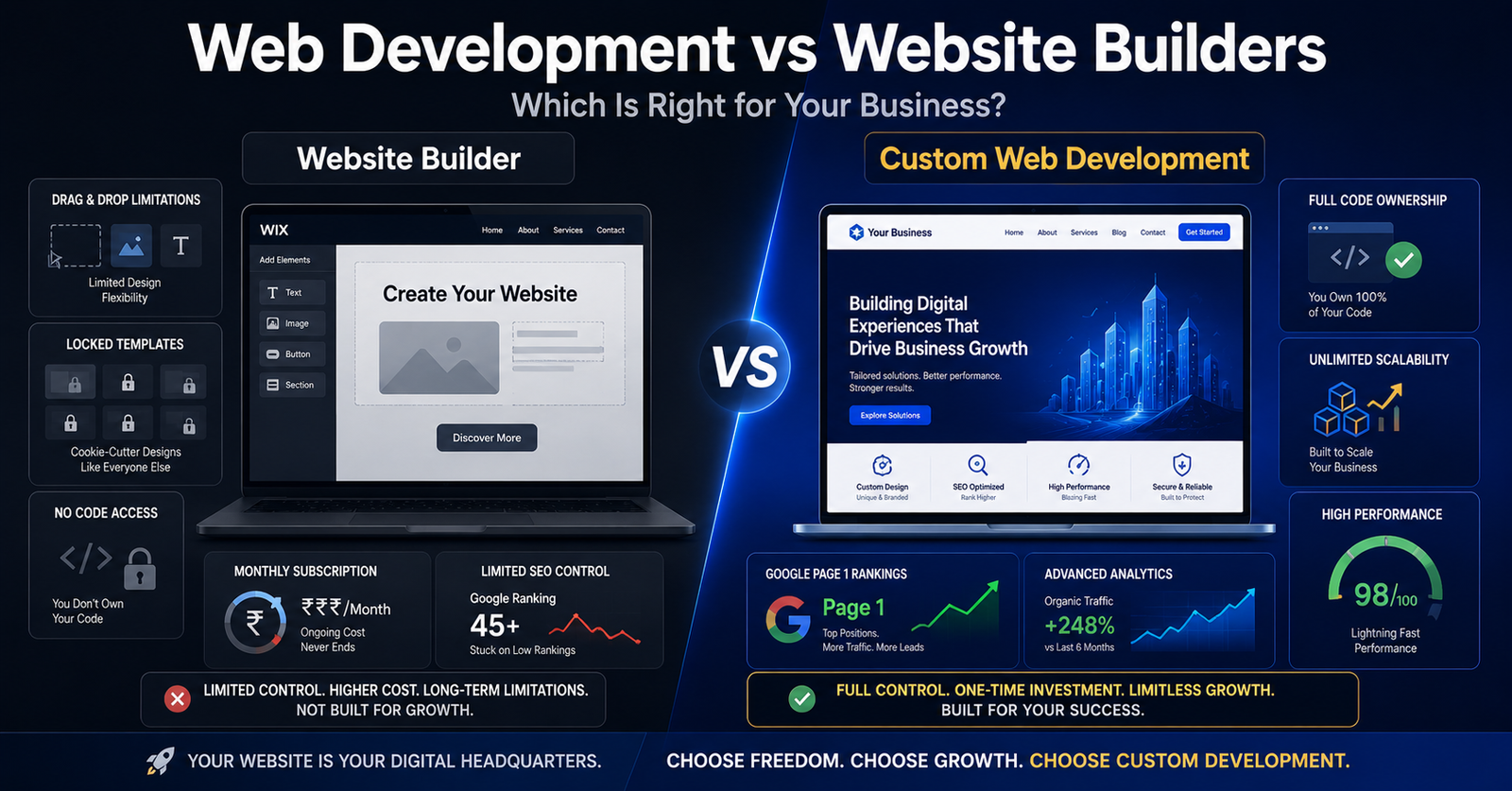
    Generic templates can only take your business so far. Custom web development services let you create a site that reflects your unique goals and brand identity.

    Here’s why it’s worth it:

    • Unique Design: Stand out with a layout tailored to your brand.
    • Performance Boost: Optimized coding equals faster, more reliable sites.
    • Scalability: Easily upgrade as your business expands.
    • Advanced Security: Custom builds offer stronger protection than templates.
    • SEO Advantage: Developers can embed SEO elements during development.

    By choosing a custom-built site, you’re not just building a website — you’re investing in a long-term digital asset that can evolve with your brand.

    Web Development Service

    Ecommerce Web Development: Turning Visitors into Buyers

    If you’re selling online, your ecommerce website becomes your virtual store. Good ecommerce development ensures your platform is secure, intuitive, and optimized for conversions.

    Top features include:

    • Responsive Design: Smooth experience across devices.
    • Secure Payments: Integrations like Stripe, Razorpay, or PayPal.
    • Product Management System: Easy inventory tracking and updates.
    • SEO Integration: Drive organic traffic from search engines.
    • Analytics & Reports: Measure performance and sales trends.

    Modern ecommerce web development focuses on speed, trust, and simplicity — the three pillars that push customers from browsing to buying.

    The Future of Web Development

    The web industry evolves daily, with new trends transforming how users experience the internet.

    Here’s what’s shaping the future:

    • AI & Chatbots: Automate customer support and personalize interactions.
    • Voice Search Optimization: Voice-enabled browsing is becoming mainstream.
    • Progressive Web Apps (PWAs): Combining the best of web and mobile.
    • Motion UI & Micro-Interactions: Adding life and engagement to designs.
    • Data-Driven UX: Designing based on analytics, not assumptions.

    To stay relevant, businesses must adopt these innovations — or risk falling behind competitors.

    Final Thoughts: Your Website Is Your Digital Backbone

    At its core, web development is about more than looks — it’s about creating a platform that delivers value, drives conversions, and represents your brand around the clock.

    A professional, high-performing website:

    • Strengthens credibility.
    • Expands reach.
    • Boosts engagement and sales.

    If you want lasting success online, investing in expert web development services is non-negotiable. A well-coded, custom-built website isn’t an expense — it’s the smartest investment for your brand’s digital future.

    What is web development?

    Web development is the root of the internet. It is the artistry and technique of making websites not only beautiful but also user-friendly. A website consists of more than just a collection of pages. It is a mesmerizing journey facilitated by code, design, and user participation.

    The three services that make up web development are:

    • The term “full-stack” refers to those programmers and developers who are capable of dealing with both the front end and back end of a website.
    • The frontend consists of all the HTML, CSS, and JavaScript coding the user will see and work with.
    • The backend is the part that consists of the code that controls the website’s server-side processes, logic, and storage (or database).

    When these elements are combined, they form the framework and spirit of every modern website.

    Web Development Matters

    Usually, the very first impression of your company to a potential customer is through your website. A good website design virtually assures a very positive first impression. The following are the main reasons for which it is worth spending money on professional web development services:

    • User Experience (UX): Persons are attracted more to a website that is fast and easy to navigate.
    • SEO Performance: Search engines favor such sites which are fast, secure, and well-coded.
    • Brand Credibility: An attractive, professionally made website will win you over by the trust of customers.
    • Lead Generation: If your website is performing at its best, you will have more chances to convert into leads.
    • Scalability: Professional web development will allow your website to grow along with your business.

    Custom Web Development Services: Tailor-made for Your Enterprise

    Every business has its own unique characteristics and requirements — and the website through which the company is presented to the world should communicate that. A great number of companies, thus, go for custom web development rather than relying on pre-designed templates. Personalized site development gives you a website that is perfectly in tune with your brand, goals, and user needs.

    There are custom web development services benefits

    • Unique Design: There are no limitations on how custom sites are to be designed based on existing templates. You are given a unique style and ambiance that belongs to you solely.
    • Better Performance: The combination of optimized codes and system design will not only result in a faster site but also a more reliable one.
    • Scalability: Your website can also be easily modified and upgraded in case your business expands.
    • Enhanced Security: Custom web development’s security features are more powerful than standard products.
    • SEO Optimization: The developers can build your site with the incorporation of SEO best practices right from day one.

    By opting for custom web development services, you are not merely purchasing a site– you are acquiring a digital asset that will become your companion and that you will be able to use for business purposes in the future.

    Ecommerce Web Development: Driving Online Sales

    The success of your online venture rests on ecommerce web development if you are selling products or services online. This part of web development is concentrated on designing online stores that are safe, quick, and user-friendly.

    Today’s ecommerce web development is not simply about installing shopping carts; it is about developing a fluid, confidence-gaining user experience.

    Key Features of Ecommerce Web Development

    1. Responsive Design: A web store must be different devices friendly and its appearance and functionality should be identical.

    2. Secure Payment Integration: One of the main factors that influence customer security and trust is the use of encryption technology by payment gateways like Stripe and Razorpay and that is why these payment methods are chosen.

    3. User-Friendly Interface: Easy navigation enables the users to find the products and to make the purchase in a very short time.

    4. Inventory Management: The system that instantly refreshes stock levels and orders.

    5. SEO and Analytics: Their function is to make you receive visitors and to check your result

    Web Development Service

    The Web Development Process

    A great website entails going through certain vital steps.

    1. In most cases, web development companies follow a systematic method which guarantees the high quality of the final product and at the same time the efficiency of the work.

    2. Planning and Strategy: Setting objectives, defining the target group, and determining the use.

    3. Design and Mockups: Building the graphical representation and the character of the site.

    4. Development: The actual writing of the code that concerns front-end and back-end is done in development.

    5. Testing: Trying out the code, speed, and the adaptability of the website.

    6.Launch and Maintenance: Installing the program and taking care of it.

    7. This organized plan is the one that guarantees the good functioning and safety of the website for a long time.

    8. Qualified teams, who provide custom web development services, are the ones

    The significance of web development to business growth has always been a topic of discussion.

    If everything is done digitally, a website can be compared to your powerful weapon in the commercial world. Good web development can bring about growing visibility, customer trust, and increasing conversion rates.

    • Brand Building: No doubt your website, in fact, represents your business day and night without taking a break.
    • Customer Reach: A site that is strategically developed draws more natural visitors.
    • Competitive Advantage: Employing custom web development services can lead to your brand becoming the shining one in the market.
    • Conversion Rates: The development of well-structured e-commerce websites has So maxing out the use of web development is eventually about linking people and technology to grow your business. who accomplish the design as well as the post-launch support.

    Web development is a saga of rapid evolution

    The continuous and rapid changing of the web world has put the companies in a situation that requires them to either embrace the new technologies and continue to exist or go extinct completely. Such factors as AI and Chatbots, Data-Driven Design, Progressive Web Applications, and Motion UI, will dictate the future of web development.

    • AI and Chatbots: Automation of customer interaction powered by AI for the purpose of customization and productivity.
    • Voice Search Optimization: Building websites that will be able to understand the voice commands of smart assistants.

    Conclusion

    Web development can be considered as the foundation stone of your online presence when put together in a breath. Your website or portal is your most powerful digital asset for sure as to it the journey from getting acquainted with the basics in this web development introduction to custom web development services and ecommerce web development has been one clear thing.

    For one thing, solid web development services are the key to a great website that not only looks good but also loads fast and retains users’ interest. In fact, hiring skilled professionals is equivalent to investing in your brand being expanded and made trustworthy.

    Besides, if staying a step ahead of your online competitors is important for you, then why not get help from the experts who handle custom web development services and make your digital success achievable.

    FAQ

    1. Q1. What does web development mean?

      Web development is the process of making, designing, and keeping websites for the internet.

    2. Q2. Why are custom web development services important?

      To begin with, they create a website that is an exact match for your business, which means more flexibility, smoother operations, and a more powerful brand as the result of your business.

    3. Q3. What makes ecommerce web development different?

      The main distinction is that this activity is concerned with the right setting up of online boutiques for the selling of products and services that have incorporated the security of payment, easy product management, and beautiful customer shopping experience.

    4. Q4. How long does it take to develop a website?

      It totally depends on the complexity of the project; it might take from few weeks to several months.

    5. Q5. What is the reason for businesses to allocate funds for expert web development services?

      One of the principal causes is that a well-designed website is a traffic magnet, builds trust, and eventually becomes a business growth driver.